Rice Milling Industry in India
India is the world’s largest rice producer and a decisive price-setter in global trade. That dominance rests on a vast, fragmented milling ecosystem that converts paddy into marketable rice for domestic consumption, the Public Distribution System (PDS), and exports. Here’s a clear view of where the industry stands, what’s driving growth, and the headwinds millers must navigate.
Market Size: Know What’s Being Measured
“Market size” figures vary a lot depending on scope—are we talking about all rice sold (the rice market) or just milling equipment and services (the rice milling market)?
- India rice market (all rice sales): Valued around USD ~47.1B in 2025, projected to grow to ~USD 60.1B by 2030 (CAGR ~5%).
- India rice milling market (processing value/equipment/services): Estimated at USD ~222B in 2023, with modest growth through 2032 (CAGR ~3.7%).
- Global milling equipment lens: Much smaller numbers (low billions) when the scope is strictly machinery.
The takeaway: Anchor your planning to the scope relevant to you (e.g., rice sales vs. processing value vs. equipment).
Production Backdrop: Volumes Still Rising
India’s milled rice output is at or near records, with 150 MMT forecast for 2024/25, underpinning steady mill throughput and capacity utilization. Government estimates also show record rice production within overall grain highs, reinforcing strong raw material availability for mills.
Growth Drivers
- Policy Push & Procurement Certainty
Custom-milled rice (CMR) for PDS continues to provide a dependable offtake channel. Policy frameworks specify delivery milestones and fortified rice norms (FRK blending), nudging tech upgrades and process discipline. - Modernization Incentives
Central schemes like PM Kisan SAMPADA and PMFME support cold chain, processing, branding, and micro-enterprise upgrades—relevant for millers integrating sorting, packaging, and value-add. - Export Relevance
Even with recent restrictions, India remains pivotal in global rice trade. Policy normalizations can quickly reopen export channels. - Technology Diffusion
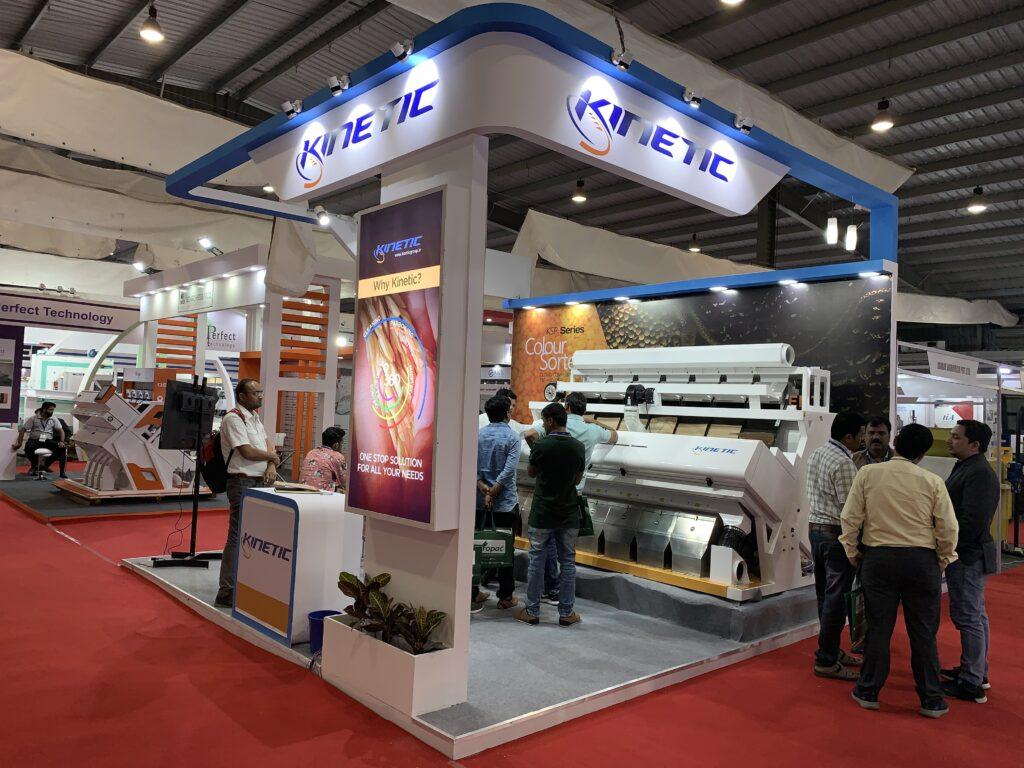
Wider adoption of color sorters, digital moisture control, energy-efficient parboiling, and integrated FRK blending lines improves head-rice recovery, consistency, and compliance.
What’s Changing in Trade Policy
Export policy has been volatile since 2022/23, with bans and duties (especially on non-basmati white and broken rice) to protect domestic inflation and food security. These curbs dented exports in 2023/24; later easing in 2025 aims to draw down swollen stocks. Policy will remain a swing factor for mill margins tied to export realization.
Structure & Operations: A Fragmented Landscape
India has tens of thousands of small and medium mills alongside a growing cohort of modern, integrated plants. The operational reality is a long tail of MSME millers serving local procurement and PDS routes, plus larger players targeting export, premium, and private-label segments.
Key Challenges Millers Must Manage
- Policy & Price Volatility
Rapid shifts in export bans/levies and procurement rules change working capital cycles, inventory risk, and realization—especially for non-PDS millers. - Paddy Quality & Hybrid Varieties
Millers often face high breakage and low head-rice yields with certain hybrids, impacting economics and commitments. - Compliance: Fortification & Delivery Schedules
FRK blending and strict delivery timelines increase capex/opex, requiring tighter process control. - Energy & Wastewater
Parboiling is energy-intensive; effluent management and emissions are increasingly scrutinized. Transitioning to husk/biomass boilers, heat recovery, and ZLD/ETP upgrades is becoming essential. - Finance & Modernization Gap
MSME millers may under-invest in advanced equipment due to credit access and thin margins. - Labor & Skills
Skilled operators for advanced sorters, fortification systems, and digital quality management systems (QMS) are in short supply. - Competing Domestic Uses for Broken Rice
The ethanol and feed industries are stronger buyers of by-products, tightening availability and prices.
Technology & Operational Playbook for Millers
- Maximize Head-Rice Yield: Adopt multi-stage de-husking, modern whiteners, and AI-assisted color sorters; maintain tight moisture control and calibrate by variety.
- Fortification Readiness: Integrate FRK dosing with inline verification; document batches for audit-readiness.
- Energy & Water Efficiency: Switch to husk-fired boilers, optimize soaking/steaming cycles, and deploy ETPs.
- Digital QMS & Traceability: Implement lot-wise grading, inline quality logs, and GRN-to-dispatch traceability.
- Market Mix Management: Hedge policy risk by balancing PDS/CMR contracts with private label, institutional, and export sales.
- Leverage Schemes: Tap PMKSY for infrastructure and PMFME for branding/marketing.
Outlook: Steady Growth, Professionalism Will Win
With production at record levels and the domestic rice market growing ~5% annually, India’s milling activity should remain robust. The profit pool will increasingly accrue to mills that are modern, compliant, and agile in channel strategy:
- Short-term (12–18 months): Expect policy tweaks balancing inflation, stocks, and welfare commitments—supportive for CMR volumes; export realizations will ebb and flow with curbs.
- Medium-term (3–5 years): Rising fortification coverage, tighter environmental compliance, and buyer demand for consistent quality will reward investment in modernization.